

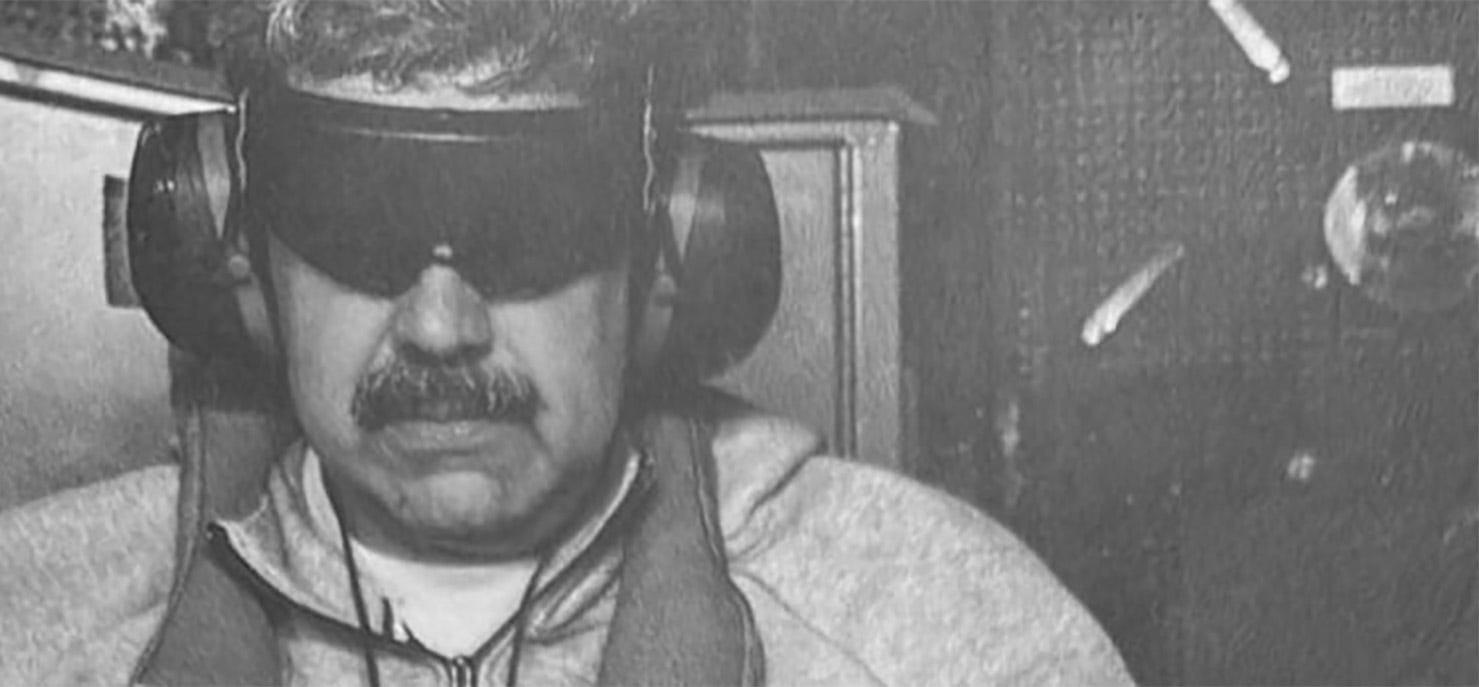
Yesterday morning, I awoke to hear the following story: in the night, the US Joint Task Force Southern Spear launched a ground invasion of Venezuela. In a daring raid preceded by devastating air strikes on key locations, SFOD-D operators infiltrated Caracas by helicopter, taking enemy fire. Using blowtorches, they penetrated layers of President Nicholas Maduro’s “heavily fortified military fortress,” abducted both him and his wife, and successfully exfiltrated the city. To add insult to injury, Hugo Chavez’s mausoleum was destroyed by a US airstrike. Reuters reported that Vice President Delcy Rodriguez had fled to Russia. Rumors swirled that Maduro’s government had apparently collapsed. Videos of Venezuelans celebrating the downfall of the regime in the streets circulated widely. Opposition diaspora members eagerly anticipated the appointment of the US’s favored replacement for Maduro, recent Nobel Prize winner María Corina Machado.
In a press conference at noon eastern time, Trump revealed the details: the operation had been like nothing seen since World War 2, he said. The Venezuelans had been waiting for an American attack, “knew we were coming,” and were “in a ready position.” Amazingly, not a single American soldier or piece of military equipment had been lost.
He then described the big picture. The US will now “run” Venezuela, at least until elections can be held. American oil companies will spend billions to repair and rebuild the Venezuelan petroleum industry. Maduro will be tried in US courts for various criminal offenses mostly related to drug trafficking.
By the afternoon, this narrative had collapsed into a mire of confusion and contradiction. The Bolivarian Navy appeared to have suffered no attrition, and the Venezuelan Air Force seemed to be intact. Videos taken in Caracas during the raid showed no resistance at all, with US helicopters hovering in place within range of small arms fire, fully vulnerable to Venezuela’s thousands of Russian Igla MANPADS and short-range air defense systems.
Delcy Rodriguez wasn’t in Russia after all, as she appeared in a video address to the world in Caracas. Even more strangely, she pledged loyalty to Maduro and demanded his release. Considering Trump had singled her out over Machado as the likely interim president of Venezuela, it was difficult to make sense of this. A collection of Venezuelan regional governors released videos affirming their support for Maduro, as did the Venezuelan military. The footage of Venezuelans jubilating over the fall of Maduro was of diaspora members in Miami and Buenos Aires, and Venezuelans within Venezuela itself have begun protests supporting Maduro.
Sites supposedly destroyed by US air strikes, including military barracks and Hugo Chavez’s tomb, were still standing and apparently undamaged. Russian Buk air defense systems at La Carlota airbase had indeed been destroyed, but were parked at the same location for months and apparently unmanned.
By the evening, a clearer picture was beginning to emerge. The raid, which took place in what should have been highly contested airspace and was preceded by a minimal or borderline nonexistent SEAD campaign, would only have been possible if the Venezuelan military had received a stand-down order. Maduro, who has been in negotiations with the US for a controlled transition of power since 2024, was either betrayed by the entire Venezuelan power structure or gave himself up willingly, and doesn’t appear to have been in a “fortress” at all at the time of the raid.
Most bizarrely, the supposed regime change operation hasn’t seemed to change the Venezuelan regime at all. Maduro’s party, PSUV, remains in control of the country, and there is zero US military presence in Venezuela currently. How the US will “run” the country in this scenario is unclear, and Marco Rubio has already publicly walked back the idea. In his press conference, Trump said the oil embargo on Venezuela will remain in effect.
The enthusiasm seen in the American media has already begun to fracture as commentators try and fail to make sense of the situation. John Bolton rapidly penned an op-ed in the Telegraph lamenting Maduro’s removal as a “hollow victory.” Elliott Abrams said in an interview on Bari Weiss’s The Free Press that he hoped the failure to appoint Machado was “just a glitch.”
Although we have no information at present about what kind of deal the Venezuelans made with the US—and a deal was certainly made – it’s a certainty at this point that this operation was more symbolic than anything, and represents another entry in what we’ll call “virtual warfare.” While all warfare has significant elements of propaganda and myth, virtual warfare crosses into something substantially different. The perception of the conflict intended by its creators isn’t a distorted version of reality; it’s something entirely disconnected from it. Both nominal sides of the conflict may collaborate to generate this artifice, and the outcome may be decided in advance. As such, it represents a work of fiction, a wholly fabricated narrative, and the underlying events can scarcely be said to have occurred at all.
“It was an incredible thing to see,” Trump said on Saturday. “If you would have seen what happened, I mean, I watched it literally like I was watching a television show.” (BBC)
In this sense, virtual war goes beyond even Baudrillard’s conception of hyperreality. While the Gulf War “did not take place” in Baudrillard’s framework, Iraqi tanks were in reality destroyed while their occupants were still inside. In virtual warfare, military casualties aren’t strictly necessary. The minimum requirement is the usage of munitions, but if all that results is an explosion in an empty patch of desert, this is typically sufficient.
Virtual warfare has become increasingly commonplace. It helped bring the so-called 12-Day War to an end, as the Iranians and Americans cooperated to stage a show for a global audience. The US struck the Fordow nuclear facility, debatably to no effect, and the Iranians retaliated with an unprecedented direct ballistic missile strike on American assets at the Al Udeid Air Base. Both sides appear to have warned each other in advance, and there were either minimal or no casualties. Prior to the Fordow/Al Udeid exchange, Israel’s attacks on Iran had a highly virtual nature. Supposed air strikes were revealed to be drone strikes from teams within the country or in Azerbaijan. Destroyed Iranian TELs were in reality decoys. Assassinated IRGC personnel later appeared alive and well.
Similarly, Operation Prosperity Guardian degraded into virtual combat as US forces in the region repeatedly bombed sites that had already been destroyed by the Saudis in 2015, and attacked gatherings of random civilians they portrayed as collections of Houthi fighters. The operation also concluded in a manner distinctive of virtual warfare, with its stated objectives ambiguously unmet, and Ansar Allah continuing to attack targets in the Red Sea and Israel.
Preludes to contemporary virtual warfare exist. In 2003, the CIA bribed Iraqi generals en masse to stand down. The killing of Osama bin Laden after a years-long manhunt has also been portrayed as a virtual event, with an essentially no-risk operation against a defenseless bin Laden conducted in cooperation with Pakistan being elevated to a daring, high-risk raid in hostile territory through the media.
The effect of virtual warfare on target populations is bizarre. Various factions walk away with entirely contradictory impressions of the events, as opposed to mass belief in a unified propaganda narrative. Basic facts are rapidly forgotten or fail to penetrate mass consciousness. Despite obvious pre-planning, virtual war narratives are typically confused and ramshackle, perhaps by design. Public statements from the Trump administration in the wake of the Venezuelan operation are borderline incomprehensible, as various figures issue a flood of incompatible motivations for it.
Combining just the narratives expressed by Rubio and Trump over the past 24 hours results in a mire of impenetrable reasoning. Is the US “running” Venezuela now, or not? Was this operation for the benefit of the Venezuelan people? To support “democracy?” Was it about oil, drugs, or US control over its sphere of influence? Was it to stop Russia, China, Iran, or even Hezbollah from gaining a foothold in the Western Hemisphere? US allies in Europe have reacted with a kind of demoralized incoherence as they struggle to fit the operation within the moral framework they’ve been projecting towards the war in Ukraine for the past four years.
The descent of US military operations into the realm of the virtual can perhaps be explained by waning American power and political aversion to casualties. While the war in Ukraine takes on aspects of virtuality, with commentators recently posting months-old maps to ignore battlefield realities, the conflict itself is self-evidently non-virtual because of the willingness of both sides to make major sacrifices in the pursuit of victory. In comparison, American-led virtual warfare is characterized by the projection of an image of risk-taking and strength over a thoroughly non-committal and risk-averse reality.
The likely primary goal of the Venezuelan operation was to serve as a warning shot to potentially sovereign states in the Western Hemisphere. This is easily provable because of multiple public warnings from the Trump administration to leadership in Cuba and Colombia in the wake of Maduro’s “abduction.” If successful, the virtual operation will be highly economical, with minimal expense, no casualties, and close to zero risk from the beginning of the campaign against supposed narco traffickers to the moment American helicopters made their exit from Caracas.
The issue with virtual warfare is that it can only succeed as long as the intended target (which is never the actual co-combatant) mistakes the artificial facade for reality. Will Cuban leadership, for example, fail to see through what was an obviously pre-planned spectacle? Even the domestic American audience already seems confused. Operations like Fordow and Prosperity Guardian have seemed to fall out of public consciousness due to the difficulty of parsing them after subsequent events.
Those who attained political consciousness during the GWOT era are equally befuddled. Expecting a decades-long quagmire with mass casualties like Iraq, we’ve instead been confronted with an unintelligible two-hour sideshow in which perhaps 40 Venezuelans were killed in total. Victory has been declared despite the situation remaining fundamentally unchanged. This morning, Marco Rubio said the US won’t be running Venezuela at all, and will pressure “changes” through an oil blockade. This is precisely the status quo. And how can the US impose a blockade on the oil it just stole for itself?
There are still many unanswered questions about “Absolute Resolve,” the Pentagon’s name for the operation. What was the precise nature of the deal the Venezuelans made with Trump? Is there cooperation between Rodriguez and the US? Was there any reality to Trump’s promises of a US oil industry takeover and “billions” of dollars of investments in Venezuela? If this event is as virtual as it appears based on the information we currently have, these questions may never be answered explicitly. Instead, the event will simply fade, remaining in a perpetual state of impenetrability, unfathomable and impossible to parse, until largely forgotten.
In domestic politics, it's sometimes necessary to redirect growing popular tension and discontent into a spectacle. Because the people demand that something happen after a certain amount of attention has been committed to an issue, a ritual that reaffirms the status quo can be substituted for a genuinely disruptive climax. French politics has had a lot of these ritualistic repetitions of "barricades in the streets" which look real but in fact maintain the status quo. The moment of crisis can "sterilized" by placing it inside the magic circle of play, sticking to traditional roles, etc.
America has invented something similar in foreign affairs: a ritual blend of Hollywood logic and airshows which, provided the target also wants to maintain the status quo, can be staged for the benefit of a world audience. People immediately forget the details because, at an unconscious level, they understand that the status quo has been stabilized, that the details were part of a ritual and not a dangerous situation that activates the hypothalamus. Genuinely dangerous situations burn themselves into the memory, like the first few weeks of coronavirus before that crisis also transitioned into spectacle and play (nobody remembers when exactly coronavirus "ended" or whether they still have to hang onto their vaccination card!)
"if we don't know what we are doing, neither does the enemy"
Every American General, ever