
They Saw it Coming
How American military planners anticipated failure in Iran

In mid-February 2026, before the US military initiated the airstrikes that began Operation “Epic Fury,” the National Intelligence Council (NIC), an agency of the executive branch created to synthesize the analysis of the US’s 18 intelligence agencies, submitted to the president a classified report detailing the prospects of an attack on Iran. This assessment, first reported on in the Washington Post and subsequently confirmed by the Associated Press, painted a grim picture. It concluded that an offensive operation launched by the US military would be unlikely to dismantle the central pillars of the Iranian government. Assassinating Iranian Supreme Leader Ali Khamenei could backfire, resulting in the consolidation of Iranian military and political structures and the activation of emergency protocols the Iranians had been preparing for years. Iran’s domestic opposition was unlikely to be able to seize power in such a scenario. A limited air campaign or even a protracted war stood a serious chance of failing to achieve regime change.
The NIC report was the final warning in a decades-long, documented history of US military and intelligence planners predicting grim strategic outcomes in a war with Iran. Official analysis anticipated every major failure of a potential conflict, from the brutal arithmetic of interceptor production to the possibility that Iran might close the Strait of Hormuz. In this piece, we’ll trace the public record of this analysis, and show that it was widely dispersed and understood within the American military, intelligence, and political establishments. We’ll rely on primary sources whenever possible, focusing on pre-war assessments, because failure is easy to identify in retrospect. Finally, we’ll attempt to establish the mechanism that caused these warnings to go unheeded.
An Empty Threat
First: the casus belli upon which the Trump administration has based its conflict with Iran. For nearly two decades, American intelligence has assessed, repeatedly and in public, that Iran was not actively developing a nuclear weapon. Moreover, American planners consistently rejected the notion that airstrikes could prevent Iran from developing a nuclear weapon in the long term.
In 2007, the NIC began work on a new National Intelligence Estimate (NIE) on Iran. This would be the first major test of reforms within the intelligence community made in response to the disastrous intelligence failures in the NIE for Iraq’s WMD program released in 2002. These reforms mandated higher standards for intelligence sourcing, review, and the precision of predictive language. After an initial draft reaffirming the prior intelligence assessments that Iran sought nuclear weapons, the NIC started over based on new analysis. The report it finally published in late 2007 said unambiguously that the Iranians had terminated prior nuclear weapons programs and were not actively seeking the bomb.
The 2007 Iran NIE ignited a political firestorm1 when portions were declassified that December. The Bush administration and hawks like John Bolton openly rejected its conclusions.2 Bush said that the US intelligence community had overcorrected for the mistakes it made in Iraq. Bolton called it “a sin of either commission or omission.” Nevertheless, the NIC and the key intelligence officials such as DIA director Ronald Burgess and DNI James Clapper defended the report and reaffirmed that position as late as 2012. No public report emerged from the NIC or any intelligence agency to supersede or correct the conclusions in the 2007 NIE.
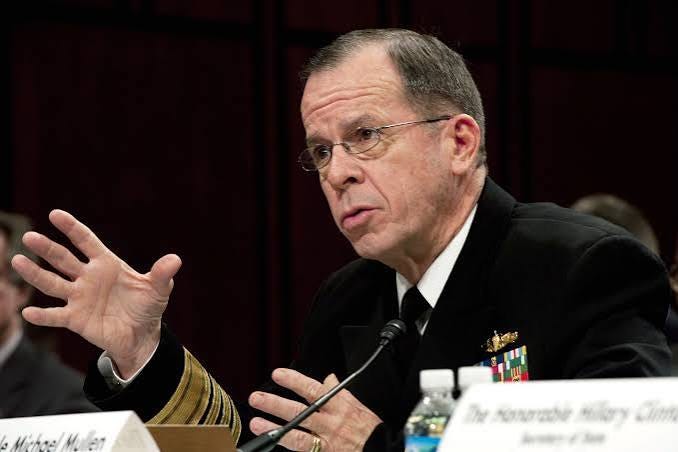
Despite this, American military, political, and intelligence leadership continued to explore their options for ensuring the Iranians wouldn’t change their minds. While the Israelis publicly inflated the threat and engaged in saber-rattling, US military officials were consistently skeptical of the value of American military action towards Iran. Amidst increased sanctions pressure on the Iranians in 2010, Chairman of the Joint Chiefs of Staff Mike Mullen publicly advocated for diplomacy as a superior solution to military action.3 In 2012, his successor, Martin Dempsey, told journalists4 that a military campaign would probably only delay an Iranian nuclear program, and that he didn’t want to be “complicit” if the Israelis chose to attack. He predicted that the diplomatic coalition exerting pressure on Iran could be “undone” in the event of a premature military operation. Former CIA Director Leon Panetta concurred with the JCS chairmen in 2011, warning that Iran wasn’t actively building a bomb, and strikes would only set the Iranians back “one or two years at most.”
But these statements were in line with the diplomatic and sanctions efforts of the Obama administration, which meant they carried little professional risk. This was not the case with military and intelligence support for the JCPOA during the first Trump administration. The administration faced severe pushback from its advisors and the military-intelligence apparatus during its fight to decertify the agreement. National Security Advisor H.R. McMaster asserted that the Iranians were in compliance with the deal. Defense Secretary James Mattis and JCS Chairman Joseph Dunford both told Congress in 2017 that the deal was in US security interests to maintain, and withdrawal would have “unfortunate ripple effects” on American diplomacy.5
The release of the 2019 Worldwide Threat Assessment (WTA), an annual report produced by the US intelligence community, reprised the political controversy of the 2007 Iran NIE. The assessment concluded, in line with previous intelligence reports, that Iran was not developing a nuclear weapon, even eight months after the unilateral US withdrawal from the JCPOA. This was in direct conflict with the Trump administration’s public statements during that period. The political fallout was intense, with Trump summoning his intelligence chiefs to a meeting in the Oval Office, and the next year’s WTA fully classified to head off additional controversy.
This conclusion would carry through all the way to the beginning of the 2026 war. Each annual threat assessment (which would be partially declassified again after 2020) up to 2023 restated the 2019 WTA’s conclusion. In 2024, the ODNI removed the conclusion pending a “reexamination,” but then restored it in 2025 under director Tulsi Gabbard. In 2024, CIA Director William Burns said that the intelligence community had no evidence that Khamenei had reversed his decision to block the development of nuclear weapons, and American intelligence would be able to quickly detect if he had.6
The historical record here is damning. American intelligence and military officials at the highest level of the power structure consistently warned four successive presidents that Iran was not developing nuclear weapons, that diplomacy was the best path for making sure they wouldn’t, and a military option could at best delay an Iranian nuclear weapons program by a year or two. These warnings helped prevent conflict, but only up until February 2026.
Attrition Arithmetic
The core issue with voluntarily entering into a protracted missile attrition war was identified by Reagan advisor Paul Nitze, who led negotiations on the Intermediate-Range Nuclear Forces Treaty with the Soviet Union, in the mid-80s. While Nitze was focused on homeland ballistic missile defense in the event of a nuclear war, the core tenet of his argument would also apply to a scenario he never envisioned: non-nuclear conflict with a smaller, regional power heavily armed with deep stocks of conventional ballistic missiles and drones. Nitze said:
New defensive systems must also be cost effective at the margin – that is they must be cheap enough to add additional defensive capability so that the other side has no incentive to add additional offensive capability to overcome the defense. If this criterion is not met, the defensive systems could encourage a proliferation of countermeasures and additional offensive weapons to overcome deployed defenses instead of a redirection of effort from offense to defense.7
He later clarified:
The defensive system must be able to maintain its effectiveness against the offense at less cost than it would take to develop offensive countermeasures and proliferate the ballistic missiles necessary to overcome it. [This] has valid application to other military systems as well.
Nitze believed that the American defense sector was theoretically capable of designing, eventually, ballistic missile defense solutions that were “cost-effective at the margin.” He was wrong. His prediction that the failure to create such systems would motivate prospective opponents to mass-produce “offensive capability” was, however, prescient. Due to the extreme cost and complexity of producing the US military’s core air defense systems, and Iranian strategic planning, the US would begin the 2026 war with severe asymmetries in capability with Iran.
The premier systems American planners knew they would rely on in an Iranian conflict would be the Terminal High Altitude Area Defense (THAAD) and Standard Missile 3 (SM-3), which cost up to $15 million and $37 million (Block IIA) per interceptor, respectively. The costs of some variants of the SM-3 have more than doubled in the past five years. With Iranian missiles costing around $1-2 million to manufacture on average, the arithmetic is devastating.8 Both systems have multi-year lead times for order fulfillment. Government Accountability Office reports dating back to 2011 flagged consistent failures to meet production targets for THAAD interceptors.
In January of 2025, Vice Admiral Brendan McLane, commander of Naval Surface Forces, detailed the interceptor expenditure rate for the US Navy during Operation Prosperity Guardian. The Navy had used 120 SM-2s, 80 SM-6s, and 20 Evolved Sea Sparrow Missiles and SM-3s.9 Later estimates would put the number of SM-3s expended at 12. Adding this to the 80 SM-3s that would later be expended in the 12-Day War, the USN had used 20% of the SM-3s ever produced in just a single year of limited military engagements. The situation with other Standard Missile models was just as bad, according to the US Naval Institute. Only 125 SMs of all types would be procured in 2025, meaning it would take the Navy two years to replace what it had used off the coast of Yemen.10
The Center for Strategic and International Studies (CSIS) subsequently warned about the dangers of this rate of expenditure in 2025. CSIS is explicitly nonpartisan and one of the country’s most prominent defense think tanks. Its CEO is former chairman of the Joint Chiefs Joseph F. Dunford, who was mentioned previously in this piece. CSIS’s warning, The Depleting Missile Defense Interceptor Inventory, estimated total stocks of both systems in the mid- to low hundreds, with no THAADs having been delivered at all between 2023 and the end of 2025. The study suggested immediate efforts to ramp up production of both systems, but acknowledged that attempting to do so would face serious defense-industrial hurdles.
Admiral James Kilby, acting Chief of Naval Operations, acknowledged the scale of the problem in April of 2025, answering a question about whether the Navy had enough interceptors with a flat: 'I think we need more munitions.'11 He gave congressional testimony on the issue in summer 2025:
The Navy's current reliance on high-cost interceptors, such as SM-6 and SM-3, is unsustainable in high-tempo operations. We must shift to use lower-cost alternatives while preserving expensive defenses for strategic weapons — or risk running short when it matters most.12
With the highest-end American air defense systems starving for munitions, the Patriot would be left to pick up the slack. We’ve covered the Patriot’s failures in Ukraine extensively before, and it’s undoubtable the Pentagon was aware of its shortcomings. It was common to see the PAC-3 program pointed to as a bright spot in comparison to the production rates of SM-3 and THAAD, but recent disclosures have revealed staggering expenditure rates, with the US firing more than half of its pre-war inventory in just 38 days.
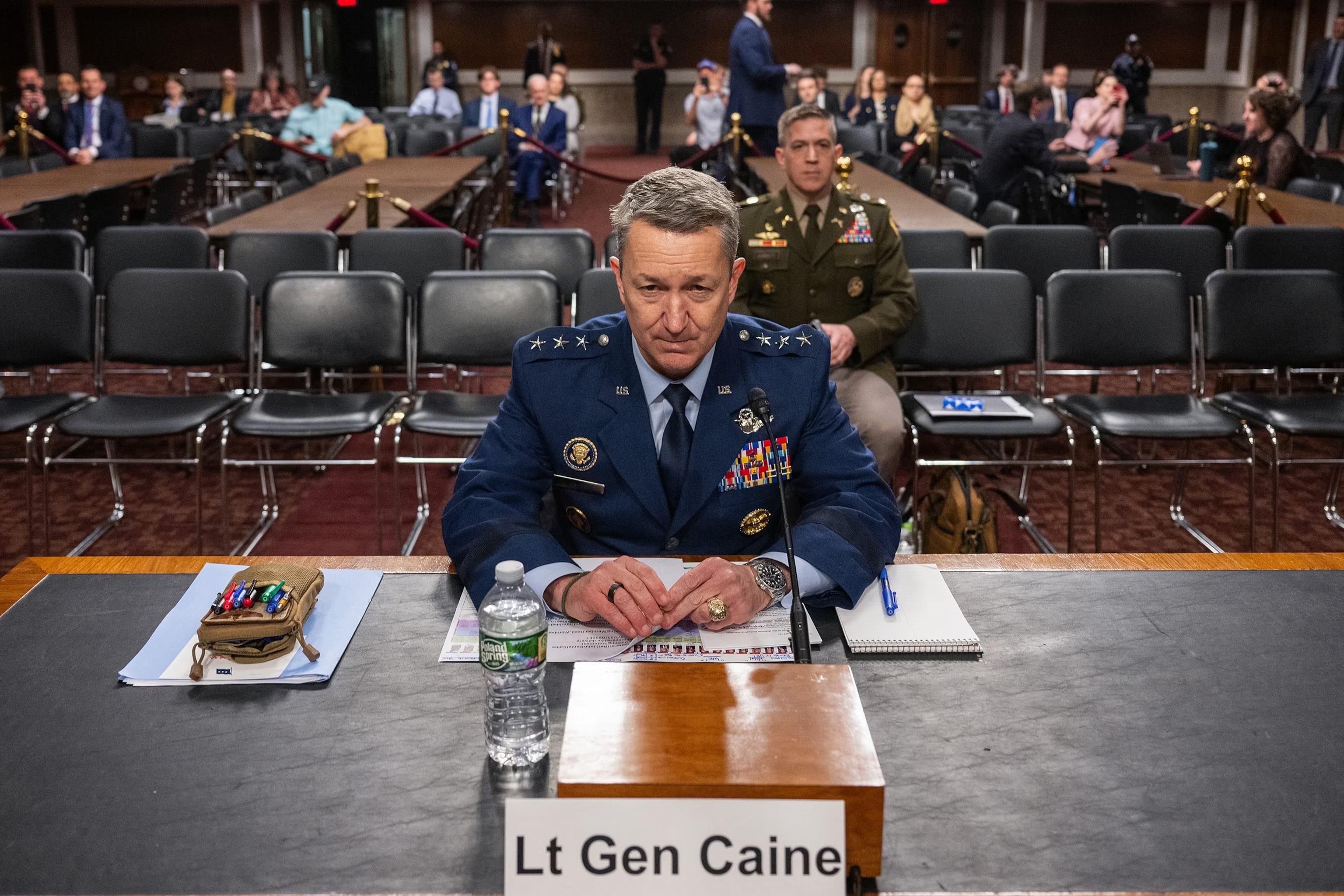
Understanding the gravity of the situation, just before the war began, Chairman of the JCS Dan Caine told President Trump directly that conflict with Iran would drastically deplete stockpiles of key munitions, including air defense interceptors.13 The warning went ignored.
The Iranians had solved the air defense problem with an entirely different strategy: underground fortifications. The US defense and intelligence structure had been sounding the alarm about their inability to overcome this “passive defense” for decades. Deeply Buried Targets, a declassified 2001 report to Congress by the Department of Defense, warned:
There are no easy answers to either the HDBT [Hardened Deeply Buried Target] or WMD Agent Defeat challenges, and certainly no 'silver bullets.' … Even with the current strategy and acquisition initiatives, the United States will still not be able to hold all known or suspected HDBTs at risk for destruction, especially the deep underground facilities …Defeat of most of these facilities with conventional means—in the traditional sense of physical destruction—is impossible… The Persian Gulf War and the series of conflicts in the Balkans revealed that facility protection, by hardening, concealment, and defenses, remains an effective response to the technology advantages in intelligence and weaponry enjoyed by the United States and its allies.
The conclusions of this report were reiterated and expanded upon in the subsequent military literature. A report by USAF Colonel Russell Hart at the Air War College published in 2012 lamented that not only had the picture not improved in the 11 years since the release of Deeply Buried Targets, rather, the strategic imbalance was getting worse:
Although the US has made significant investments to defeat hard and deeply buried targets since 1999, recent studies show that US military capabilities are becoming much less effective at holding these facilities and other underground facilities at risk. Gaps appear not only in US weapons capabilities to destroy these targets, but also in intelligence capabilities to effectively locate and characterize them.14
The Iranians made rapid progress in their efforts to bury their most important military assets. The Defense Intelligence Agency (DIA) understood fully that Iran had developed a complex and robust defensive doctrine designed from the ground up to give it an advantage in war with the United States, specifically, and said so in their assessment of Iranian military power published in 2019:15
Denial and deception (D&D) is a core component of Iranian military doctrine, and Iran uses D&D techniques extensively to reduce the vulnerability and increase the survivability of its military forces. To apply these techniques across the military, Tehran has established what it calls a “passive defense” doctrine. The effort was based on lessons learned from past military conflicts, including U.S. operations in the Middle East and the 2006 Israel-Hizballah conflict. Key Iranian passive defense measures include camouflage and concealment, force dispersals, underground facilities, and highly mobile units. For example, Iran configures some military vehicles to resemble civilian trucks….Iran has the largest underground facility (UGF) program in the Middle East. Based on the central pillars of Iran’s passive defense doctrine, Tehran has invested heavily in constructing UGFs to conceal and protect critical military and civilian infrastructure throughout the country. Iran designed and built these facilities to support various aspects of its defense industries, key nuclear infrastructure, and military forces, including naval sites, missile bases, and equipment storage.
While more could be said here about American shortages in standoff weaponry, it isn’t necessary to prove the point. The US military knew in February of 2026 that it didn’t have the air defense munitions to defend military and infrastructural assets in the region, and it knew that it would be unable to put underground Iranian assets at risk. These twin realities dramatically reduced the possibility of success in the conflict on their own.
A Quirk of Geography
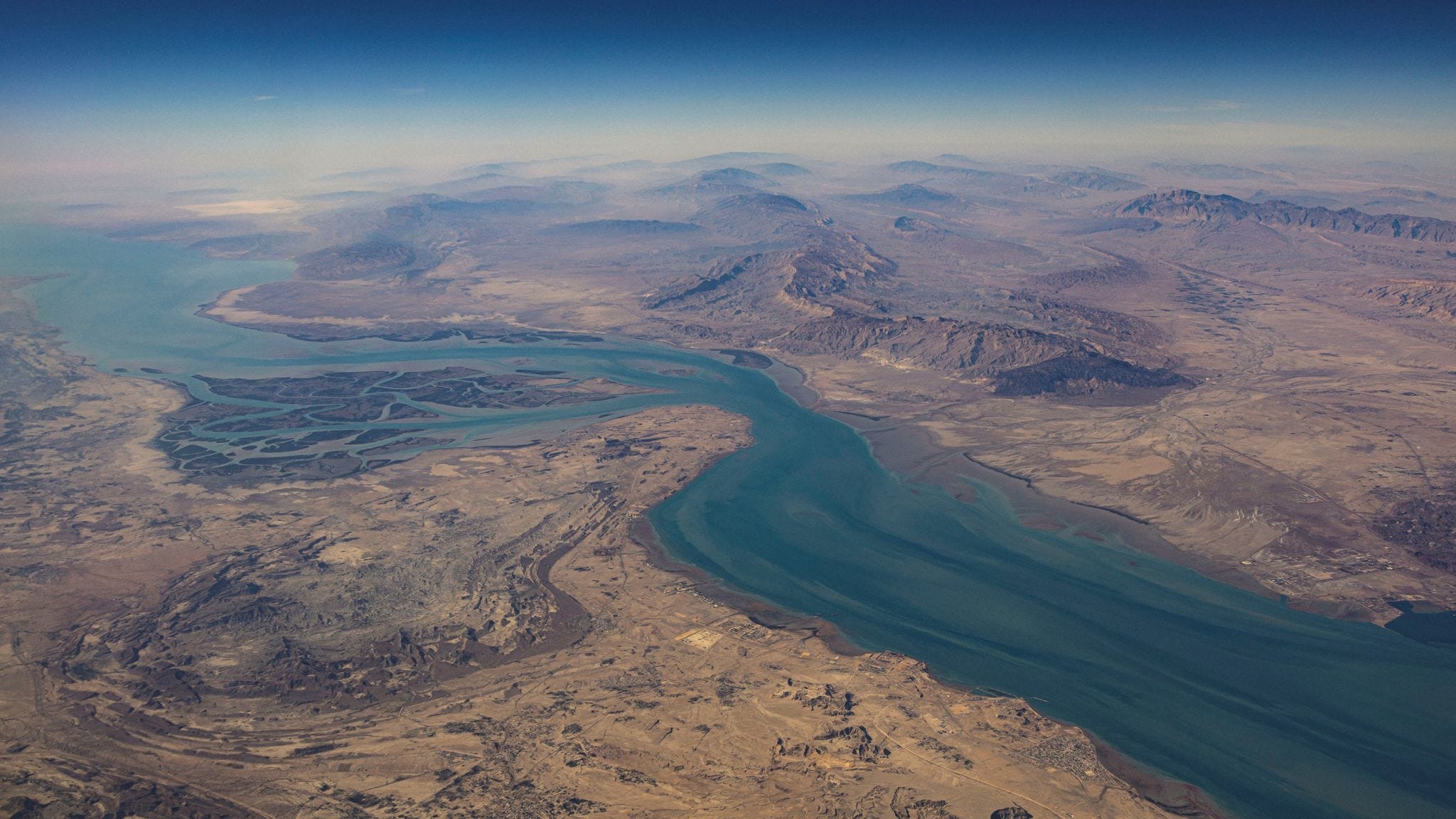
After the Iranians took steps to shut down traffic through the Strait of Hormuz, a popular conception has emerged that American military planners failed to anticipate this. This is wrong. In 2007, Admiral William Fallon was asked directly during his confirmation hearing for the role of CENTCOM commander if he believed Iran could close the Strait of Hormuz. He declined to answer on the immediate public record, but his response was later made public in congressional transcripts:
Iran’s strategy in part centers on their ability to control and/or close the Strait of Hormuz. In addition, Iran maintains the capability to interdict sea lanes of communication throughout the Arabian Gulf and selectively target one or more Gulf countries’ off-shore infrastructure, commercial transit lanes, and anchorages throughout the region. Iran maintains a large inventory of naval mines, an expanding coastal defense force equipped with a mix of Chinese manufactured anti-ship cruise missile launchers, an extensive mix of high speed fast attack craft equipped with torpedoes and anti-ship cruise missiles and at least 3,000 smaller patrol boats equipped with a mix of heavy machine guns, rocket propelled grenade launchers, shoulder launched surface-to-air missile launchers, and anti-tank guided missiles. Iranian leaders likely realize their naval forces cannot win a conventional force-on-force naval engagement with U.S. naval forces, and have therefore developed a strategy that uses their geographic advantage to put into play a layered defense strategy that relies on waves of near-simultaneous attacks against maritime targets to overwhelm the defenses of the target. Given Iran’s current naval forces capability, Iran could attempt to temporarily close the Strait of Hormuz for a short period, principally using naval mines and coastal defense forces… Should our relationship with Iran deteriorate to the point of hostilities, we are capable of neutralizing the military threat to U.S. naval vessels and preserving access through the strait for commercial traffic.16
Fallon’s optimism wasn’t universally shared. In 2009, the Office of Naval Intelligence (ONI) published Iran’s Naval Forces. The report described in detail that Iran was capable of strangling traffic through the strait, and would do so if its leadership felt seriously threatened. The ONI predicted “serious economic consequences” worldwide if this happened. Jonathan Schroden of the Center for Naval Analyses concluded that the Iranians wouldn’t necessarily need to fully close the strait to cause damage to the US economy in a 2011 paper.17 He cautioned planners that Iran could emerge from a conflict over Hormuz politically and strategically stronger, even if the strait were reopened by military force. He warned:
Strategists need to think through what "failure" might look like for the U.S. and its Coalition partners as a result of a conflict over closure of the Strait (and conversely, what "success" might look like for Iran), and how to prevent such scenarios from playing out. Simply assuming that military action is required as a response, or that tactical and operational successes will translate into strategic ones, leaves the door open for Iran to snatch a strategic win from the jaws of defeat
The 2012 Office of the Director of National Intelligence (ODNI) Worldwide Threat Assessment said Iran likely had the capability to close the strait. JCS Chairman Dempsey told Congress, “The simple answer is yes, they can block it,” in 2012.18 The ONI concluded Iran was “well positioned” to leverage the Strait of Hormuz in 2017, and the aforementioned 2019 WTA acknowledged “Iran continues to develop, improve, and field a range of military capabilities that enable it to target US and allied military assets in the region and disrupt traffic through the Strait of Hormuz.”19
That Iran might retaliate against Gulf oil infrastructure in response to being attacked was also anticipated, both by the Congressional Research Service and the DIA. The 2019 attack by Ansar Allah on Saudi oil infrastructure in Abqaiq set a clear precedent that American air defenses, which failed to intercept the attack, could struggle to protect economically crucial sites. Shortly afterward, Dunford told Congress that no single system could defend against such a threat, though a layered system 'could mitigate' it. The CRS noted, “Iran and/or its allies have the capability to cause significant damage to U.S. allies and to U.S. regional and global economic and strategic interests.”
Debasification
If American planners knew they couldn’t protect Gulf oil infrastructure, they understood even better, and were much more concerned with, their inability to defend their own bases in the region. The USAF had been aware of this issue for decades. It commissioned a RAND study analyzing the vulnerability of American air bases to cruise and ballistic missile attacks in 1997.20 RAND imagined a theoretical war with Iran in 2007, and even though the Iranian ballistic missile program was in a state of relative infancy at the time it was written, the paper explicitly treated Iranian missiles as a major threat to American assets in the region. It said Iran would engage in large-scale, repeated missile and UAV attacks on American bases. RAND projected the future state of Iranian missile technology and calculated that it would be within their capabilities to inflict massive losses of airframes and personnel with a “surprisingly small” number of submunition warhead cruise and ballistic missiles. Air defense radars and fire control systems for air defense systems would be targeted, and fixed assets could be located using commercially available satellite imagery and human intelligence from locals friendly to Iran. Unless serious steps were taken to mitigate this threat, the USAF would be forced to “abandon bases within reach of enemy missiles.” This applied to all bases along the southern edge of the Persian Gulf and most in Saudi Arabia.
The RAND report outlined potential solutions to this problem, but flagged explicitly that none were a silver bullet, and most came with severe tradeoffs. Hardened aircraft shelters would be prohibitively expensive and couldn’t possibly cover all the equipment needed to keep an air base operational. Dispersing aircraft across tarmacs would place constraints on sortie rates, as would operating exclusively from bases outside ballistic missile range (600 miles from the Iranian coast, in RAND’s projection).
The USAF internalized these lessons and developed the Agile Combat Employment (ACE) doctrine. This doctrine took for granted that “air bases are no longer considered a sanctuary from attack, regardless of their location” and encoded methods for dispersing assets across larger numbers of smaller air bases, keeping aircraft highly mobile so they could evade missile and drone attacks.21 But USAF planners recognized that this strategy alone wouldn’t be sufficient to avoid major losses and maintain sortie rates, and recommended the same “active and passive defenses” RAND did in 1999. The core problem remained: large, valuable, fixed assets. General James Slife, USAF, in 2024: “When you’re fixed to runways there’s only so many… aim points that adversary rocket forces have to be able to target.”22
American strategists understood that US forces in the region were overextended. In 2022, CENTCOM commander General Frank McKenzie proposed to the Biden administration that plans be drawn up to move USAF basing to Israel and Egypt in the event of war with Iran, but the idea was rejected.23 In July, once the Iran War was already well underway, McKenzie said in a JINSA webinar “No one in their right mind would ever put the Centcom forward headquarters, you know, 100 miles away from Iran, [in Qatar], yet that’s where it is.” McKenzie wrote an op-ed in 2024 where he stated the issue plainly, “In a full-blown war with Iran, these existing bases will be rendered unusable by sustained Iranian attack. The Iranians can see this and have created a large and very capable missile and drone force in part to exploit this situation.”24
The warnings issued by RAND and McKenzie were taken seriously, and Pentagon planners took the unprecedented step of evacuating bases in the region in the lead-up to the war, moving thousands of personnel into hotels or out of the region entirely.25 Air assets now operate out of distant bases in Jordan and Israel. The layers of active and passive defenses RAND envisioned were only partially constructed, and abandoned American bases have taken heavy attrition.
While the evacuation of bases may have taken many observers by surprise, it was the result of decades of strategic thinking. American planners knew those bases were indefensible, and that they had no choice but to accept the political and operational consequences of abandoning them.
The Limits of Air Power
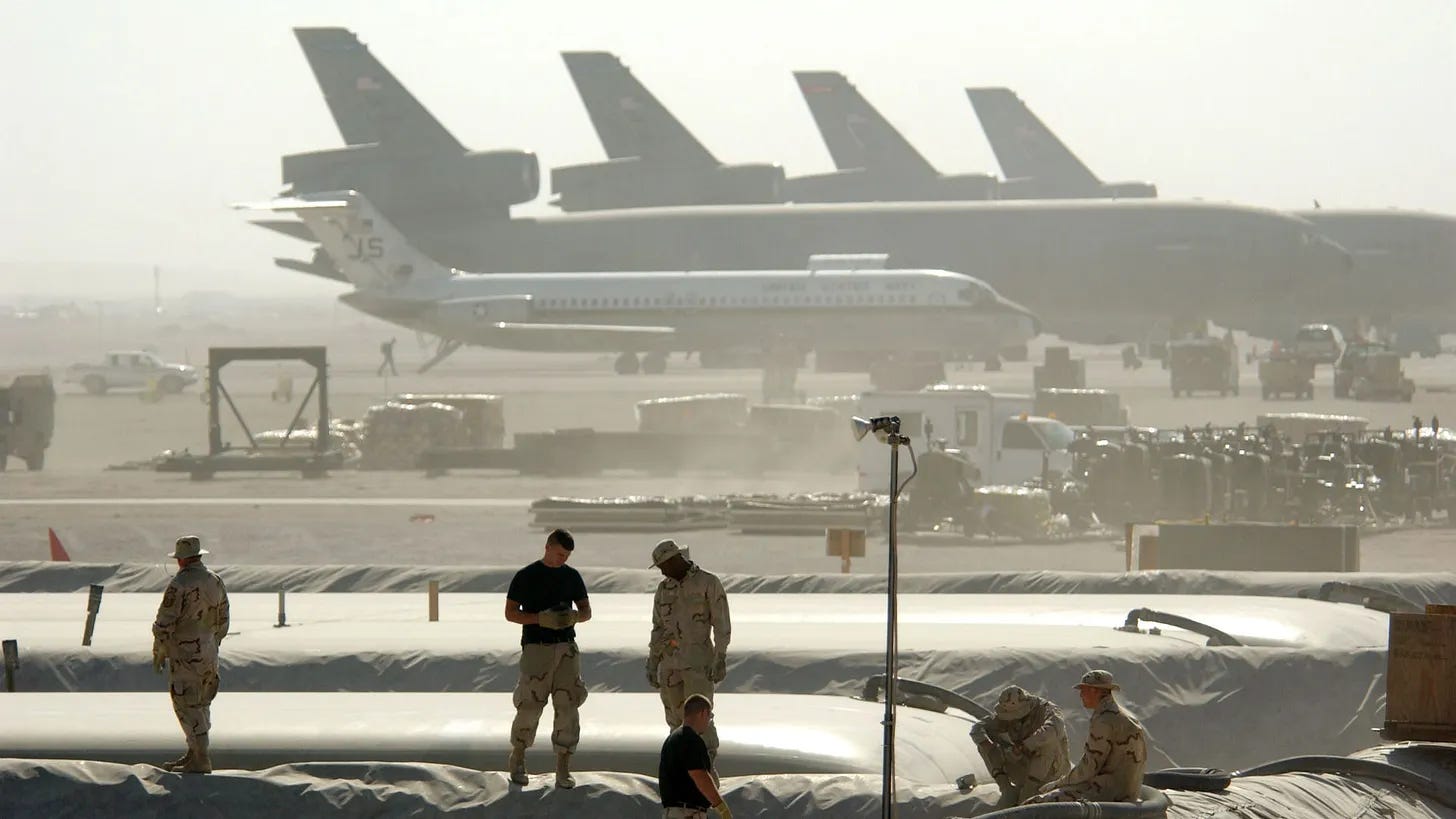
The abandonment of bases would compromise the ability of US air forces to achieve lasting air supremacy and high sortie rates in airstrikes on Iran. But given Iran’s vast size and number of dispersed targets, sustained air supremacy would be essential both for locating and attacking targets in a sustained campaign, and allowing the deployment of cheap and plentiful glide bombs over expensive and scarce long-range cruise missiles. American planners had little reason to think they’d be able to achieve lasting air supremacy across all of Iran.
Retrospective studies of Operation Allied Force, NATO’s 1999 bombing campaign against Serbia, took a dim view of limited air campaigns. A report by Admiral James Ellis admitted that even though the NATO force executed 38,000 combat missions, it never fully brought down the Serbian air defense network.26 Aircraft operated above 15,000 feet to reduce the risk of shootdowns. RAND noted that the Serbs kept their SAMs dispersed and only switched their radars on briefly, and NATO’s efforts to locate these SAMs and other Serbian ground targets were “largely unsuccessful.”27 A planned 72-hour campaign ballooned to 79 days as a result.
Even the 1991 Gulf War, often identified as the prime example of the strength of air power, wasn’t a clear-cut success. RAND’s 1994 critical review on Air Power in the Gulf War asserted that Desert Storm featured multiple “major disappointments” in the air domain, including a failure to “locate and destroy mobile SCUD launchers.”
The USAF’s ACE doctrine admitted the shifting balance, though it limited this to “peer conflicts”:
In future peer conflicts, the US should not expect to achieve the air supremacy it enjoyed in recent low intensity operations. Rather, it is more likely that every domain will be contested and characterized by fluctuating levels of superiority.
But even if air supremacy could be achieved, the Pentagon knew that air power alone would be unlikely to force Iranian capitulation. This subject had been studied extensively throughout the previous two decades. Colonel Lawrence Wilkerson took a dim view of air power when testifying before Congress on the prospect of war with Iran in 2007: “The more widespread strikes, while devastating—and they would be—would solidify a nation of 70-plus million people… the uniting factor would be nationalism and a visceral hatred for America.”28 In the same hearing, Colonel Samuel Gardiner, USAF (ret), said:
The Revolutionary Guard units we don’t hear much talked about is they are prepared for an air strike. They are heavily bunkered and heavily re-vetted [in revetments]. It would be very difficult to put punishment on them.
Controlled Experiments
Even if US military and intelligence strategists had failed to anticipate the failures outlined above, they had an incredible advantage in projecting how the 2026 Iran War would unfold: a series of five limited military operations that demonstrated each of the failures in advance of the major conflict itself. These were Prosperity Guardian (December 2023), Poseidon Archer (January 2024), Days of Repentance (October 2024), Rough Rider (March 2025), and Rising Lion (June 2025).
Prosperity Guardian showed that even a relatively resource-poor and weak military force could shut down a crucial maritime chokepoint with standoff munitions, and that an American naval force would be unable to stop it. Poseidon Archer and Rough Rider proved that a limited air campaign could fail to suppress the launches of those standoff munitions. Despite these three operations costing billions, they didn’t restore commercial confidence in shipping in the Red Sea, which was still down 60% from pre-2023 levels at the beginning of 2026.29 A post-mortem on the Red Sea Crisis published by West Point in June 2025 offered a blunt description of the failure of every option available to two successive presidential administrations:
This was the menu of options that the Biden administration had in November 2023, and it was largely the same menu that the Trump administration had in March 2025. Over the past year and a half, the United States has either attempted or threatened nearly all of these options, with little success.30
The lesson for a prospective war with Iran was obvious. If the US couldn’t do it in Yemen, it wouldn’t be able to suppress Iranian drone and missile launches in the Persian Gulf or reopen the Strait of Hormuz.
The two major Israeli air operations against Iran in 2024 and 2025, “Days of Repentance” and “Rising Lion,” respectively, showed that even massive air attacks on Iran would fail to seriously degrade Iranian missile and drone launch capability. Video evidence of dozens of Iranian missiles striking targets in Israel proved that the Iranians were capable of penetrating the US/Israeli missile defense system at long range. Air Force findings from two decades earlier on the impossibility of destroying deeply buried targets held, as evidence slowly emerged that the Fordow site struck by the US in the closing days of the 12-Day War hadn’t been “obliterated,” as the Trump administration claimed, with the centrifuges there “largely intact,” according to the DIA.31
Israeli narratives that they had achieved freedom of movement in Iran’s skies were later thrown into question as disclosures revealed many of their supposed airstrikes had been drone and ground-based missile launches from within Iran itself.32 The Iranians have consistently, in every stage of conflict against them, demonstrated their ability to retaliate, precluding an assessment that airstrikes would prevent them from launching ballistic missiles and drones.
Regime Change
Prior to the 2026 Iran War, five successive mass protest movements from 1999 to 2022 had failed to topple the Iranian government, despite strong western support. The USAF commissioned Dangerous But Not Omnipotent, a RAND report on Iranian political and military power in 2009. The report concluded that American decision-makers should avoid direct conflict with Iran, as this would be unlikely to bring about regime change.33 RAND said even attempting to employ Cold War-era containment strategies would create “opportunities for Tehran to exploit” and “regime survival” was a fundamental driver of Iran’s behavior.

In 2019, the DIA outlined how the Iranian state had restructured itself specifically to survive internal threats, and said its opponents were disorganized, writing, “Iranian political and ethnic opposition groups are largely localized and lack unity, posing little threat to the regime.” In the weeks leading up to the war, American planners recognized that the latest wave of protests had failed. The CRS found that “even so-called moderates have backed the crackdown against what the regime has characterized as a US and Israeli-backed plot” and that there had been no “widespread defections from within Iran’s military, security forces, or political elite.”34
The USAF’s doctrinal publication Strategic Attack identified the limitations of decapitation strikes:
Leadership attack is a specific form of attrition that removes enemy leadership by direct attack when members of that leadership constitute lawful targets…. Leadership attack is most effective when an enemy is led by a single charismatic and authoritarian figure who cannot be easily replaced. It is also effective against organizations with rigid, hierarchical leadership structures, since US forces can identify, locate, and remove those leaders and their replacements… As a matter of practice, US forces have often avoided attacks on the national leadership of an enemy State based on comity.35
American planners knew that Iran, with its complex, parallel political, clerical, and military structures, was a poor target for a leadership attack. The NIC told the Trump administration this in mid-February, just weeks before the war began. Iran’s military and political structure had “pre-arranged protocols” in place in the event of Khamenei’s assassination, the report said. It was “unlikely” that even a large, prolonged military campaign would result in regime change, “even if the current leadership was killed.”36
The NIC was entirely correct. The mass protests failed, just as they had in the past, and Iran’s power structure rapidly adapted to the US/Israeli assassination campaign.
Assessment vs. Assessment
Given the clear historical record of American anticipation of these failures, it should now be asked why these warnings went largely ignored. If the Pentagon and intelligence community understood the bleak prospect for success in Iran, if their assessments anticipated debasification, munition shortages, the closure of Hormuz, the superiority of diplomacy, the difficulties with achieving air supremacy, and the unlikely prospect of regime change, how did they find themselves embarking on what was, by all available evidence, an unwinnable war? The answer to this question can be found in a series of leaks made shortly after the war began to The New York Times.
In the lead-up to the war, every assessment made by the Pentagon and US intelligence apparatus was directly contradicted by competing assessments made by the Israeli planners and presented directly to the Trump administration. Mossad chief David Barnea traveled to Washington in mid-January and delivered a comprehensive plan to assassinate the Iranian leadership and stir mass protests to accomplish regime change.37 The Israelis also presented a supporting plan to invade Iran with Kurdish proxy forces, but American strategists had already identified that the Kurds were too dispersed and disorganized to be used for this purpose, and doing so would strain relations with Turkey. Israeli Prime Minister Benjamin Netanyahu heavily lobbied the Trump administration to convince them the plan was achievable. Throughout this process, US military and intelligence officials fought fiercely to convince the administration that the plan would fail, but were overruled.
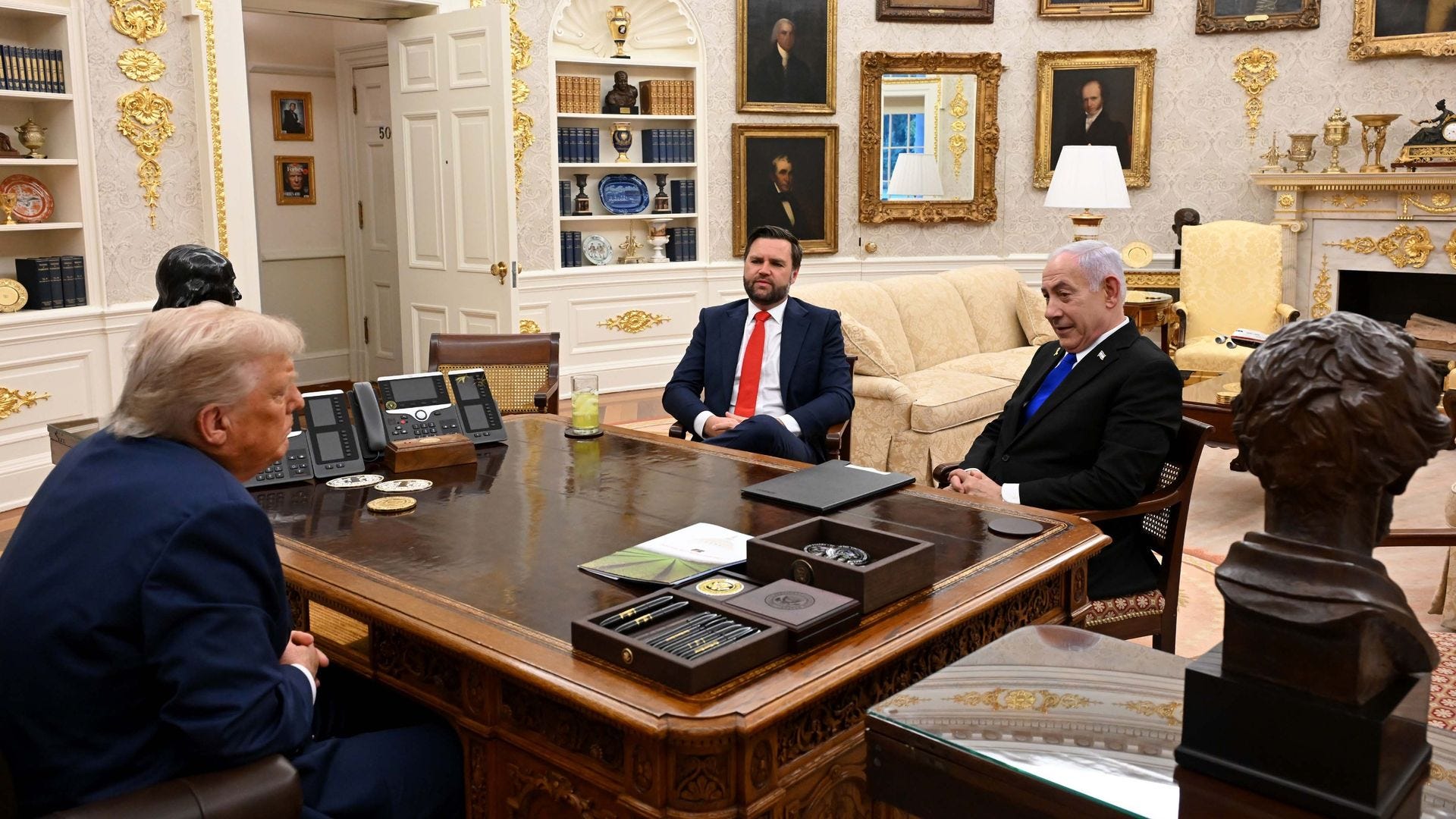
On the 11th of February, Trump held a situation room meeting with Rubio, Hegseth, General Caine, CIA Director John Ratcliffe, Steve Witkoff, Jared Kushner, and Netanyahu.38 Barnea and other Israeli officials attended virtually. The meeting lasted more than an hour, and the Israelis made their final case for the war. They said Iran’s ballistic missile program could be destroyed in a few weeks, Iran would be too weak to block the Strait of Hormuz, airstrikes would inspire the Iranian people to rise up against the government, Kurdish forces would bog Artesh down in Western Iran, and exiled Crown Prince Reza Pahlavi would be on standby to seize power at the opportune moment. After Netanyahu’s presentation, President Trump responded, “Sounds good to me.” When others present brought up potential risks, Netanyahu told them inaction was a greater risk than action.
The American military and intelligence structure scrambled to present a rebuttal to the Israeli plan, and produced a comprehensive response the next day in an American-only meeting. They agreed that they could kill Khamenei and degrade Iran’s ability to project power, but triggering a popular uprising and achieving regime change were “detached from reality.”
When Mr. Trump joined the meeting, Mr. Ratcliffe briefed him on the assessment. The C.I.A. director used one word to describe the Israeli prime minister’s regime change scenarios: “farcical.”
Trump asked Caine directly what he thought:
“Sir, this is, in my experience, standard operating procedure for the Israelis. They oversell, and their plans are not always well-developed. They know they need us, and that’s why they’re hard-selling.”
Caine specifically told Trump that Iran would likely close Hormuz, and the US force in the region would have difficulty unblocking it. JD Vance tried to change Trump’s mind, warning him the operation would unleash chaos in the region, and cited the munition shortage explicitly. But Trump had already made up his mind, and both Vance and Caine demurred from taking more serious action to stop the war from proceeding. Vance told Trump that even though he thought it was a bad idea, he would support the president’s decision. Decades of Israeli efforts had culminated in an incredible triumph of influence without any precedent. The US military would deliberately enter into a war of aggression it knew it would lose.
Days later, the Israelis presented Trump with intelligence that Khamenei would be meeting on the 28th of February with high level Iranian officials above ground, where they could attack him. When the American group met again on the 26th, the plan was in place. Caine told Trump that if he ordered the operation, the military would execute it. The next day, Trump gave the green light, and the rest, as they say, is history.
https://www.cia.gov/resources/csi/static/2007-Iran-Nuclear-Intentions.pdf
https://www.npr.org/2007/12/08/17049504/bolton-discusses-nie-report-on-iran
https://www.nbcnews.com/id/wbna36630187
https://www.theguardian.com/world/2012/aug/30/israeli-attack-iran-not-stop-nuclear?newsfeed=true
https://foreignpolicy.com/2017/09/26/trumps-top-general-says-iran-honoring-nuke-deal/
https://www.cbsnews.com/news/cia-director-william-burns-warns-misjudgments-could-escalate-conflict-israel-hamas-lebanon/
https://nipp.org/information_series/matthew-r-costlow-a-curious-criterion-cost-effective-at-the-margin-for-missile-defense-no-537-october-21-2022/
https://www.theatlantic.com/ideas/2026/03/us-iran-war-air-strikes/686228/
https://www.military.com/daily-news/2025/01/15/navys-fight-red-sea-used-220-missiles-officials-say-thats-changing.html
https://www.usni.org/IndustrialWarfareAtSea
https://www.foxnews.com/politics/navy-kilby-houthi-missiles-red-sea-costs
https://www.businessinsider.com/us-navy-reliance-on-top-missile-interceptors-unsustainable-admiral-2025-7
https://www.nytimes.com/2026/04/07/us/politics/trump-iran-war.html
https://www.airuniversity.af.edu/Portals/10/CSAT/documents/researchpapers/2012/bh_2012_hart.pdf
https://www.dia.mil/Portals/110/Images/News/Military_Powers_Publications/Iran_Military_Power_LR.pdf
https://www.congress.gov/event/110th-congress/senate-event/LC10498/text
https://www.history.navy.mil/research/library/online-reading-room/title-list-alphabetically/s/strait-comparison-lessons-learned-from-1915-dardanelles-campaign.html
https://www.iranwatch.org/sites/default/files/us-crs-iransthreattothestraitofhormuz-012312.pdf
https://www.intelligence.senate.gov/wp-content/uploads/2024/08/sites-default-files-documents-os-dcoats-012919.pdf
https://www.rand.org/pubs/monograph_reports/MR1028.html
https://www.doctrine.af.mil/Portals/61/documents/AFDN_1-21/AFDN%201-21%20ACE.pdf
https://www.nationaldefensemagazine.org/articles/2024/7/29/just-in-the-air-force-has-considerable-base-defense-challenge
https://www.middleeasteye.net/news/us-needs-move-bases-from-gulf-to-israel-former-centcom-commander-says
https://jinsa.org/to-deter-iran-us-must-rethink-military-basing-in-the-mideast/
https://www.nytimes.com/2026/03/25/us/politics/iran-us-bases.html
https://www.cbsnews.com/news/serb-air-war-lots-of-misses/
https://www.rand.org/pubs/research_briefs/RB75.html
https://www.govinfo.gov/content/pkg/CHRG-110hhrg51518/html/CHRG-110hhrg51518.htm
https://www.bimco.org/news-insights/market-analysis/shipping-number-of-the-week/2026/0107-snow/
https://ctc.westpoint.edu/feature-commentary-an-assessment-of-operation-rough-rider/
https://www.nytimes.com/2025/06/22/world/middleeast/iran-fordo-nuclear-damaged-not-destroyed.html
https://www.twz.com/air/israel-hid-drones-missiles-around-iran-to-target-nuclear-facilities-and-more-report
https://www.rand.org/pubs/monographs/MG781.html
https://www.congress.gov/crs_external_products/IF/PDF/IF13153/IF13153.6.pdf
https://www.doctrine.af.mil/Portals/61/documents/AFDP_3-02/AFDP_3-02_Strategic_Attack.pdf
https://apnews.com/article/iran-intelligence-assessment-trump-ad20c1f1168d4318af516d7b19d372e7
https://www.nytimes.com/2026/03/22/us/politics/iran-israel-trump-netanyahu-mossad.html
https://www.nytimes.com/2026/04/07/us/politics/trump-iran-war.html
Incredible piece — deeply researched and put together beautifully.
The line that’ll stay with me: American intelligence predicted almost every failure mode of this war in advance — and in public — for two decades. That’s not a failure of analysis, that’s a failure of the system built to act on it. History rhyming, as always, but this time the transcript was available the whole time.
1. Israel is perfectly content to burn the entire rest of the world down, as long as Iran is destroyed in the process.
2. Trump is perfectly content to burn the rest of the world down, as long as he is not personally affected and The Files are not made public.