
The Russians Strike a 750kV Substation
An update on the energy war

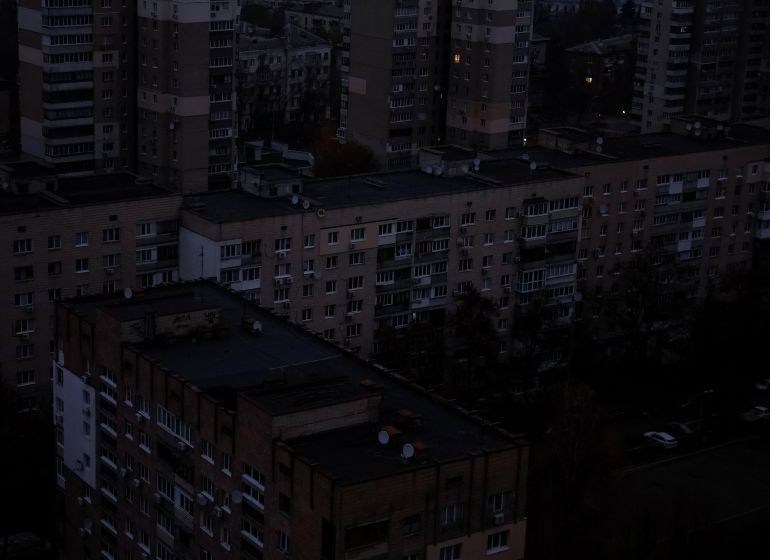
At the time of writing, most of central and eastern Ukraine is subject to power outages. Last night, the Russians delivered a strike package of around 450 drones and 50 ballistic and cruise missiles against Ukrainian energy infrastructure. This combined attack was significant because the vast majority of the missiles used were Iskander-M and Kinzhals, neither of which is likely to be intercepted. Preliminary reports suggest both electrical and gas infrastructure were the targets. Large fires were seen burning in Poltava, the home of Ukraine’s largest gas fields. Gas sites in Poltava were also struck in mid-October.
The situation on the ground in Ukraine is chaotic. Where there’s power, it’s highly unstable, causing streetlights to constantly flicker, indicating that the Ukrainians are having difficulty balancing the grid. This can be seen in this video taken in Poltava:
Both of state-owned energy company Centrenergo’s two thermal power plants are currently entirely offline (note: social media posts claim Centrenergo still operates a TPP in Donetsk. Russian forces captured the facility in 2022) . Its plants supply power to Kiev and Kharkov oblasts. Preliminary reports suggest they may not be brought back online anytime soon.
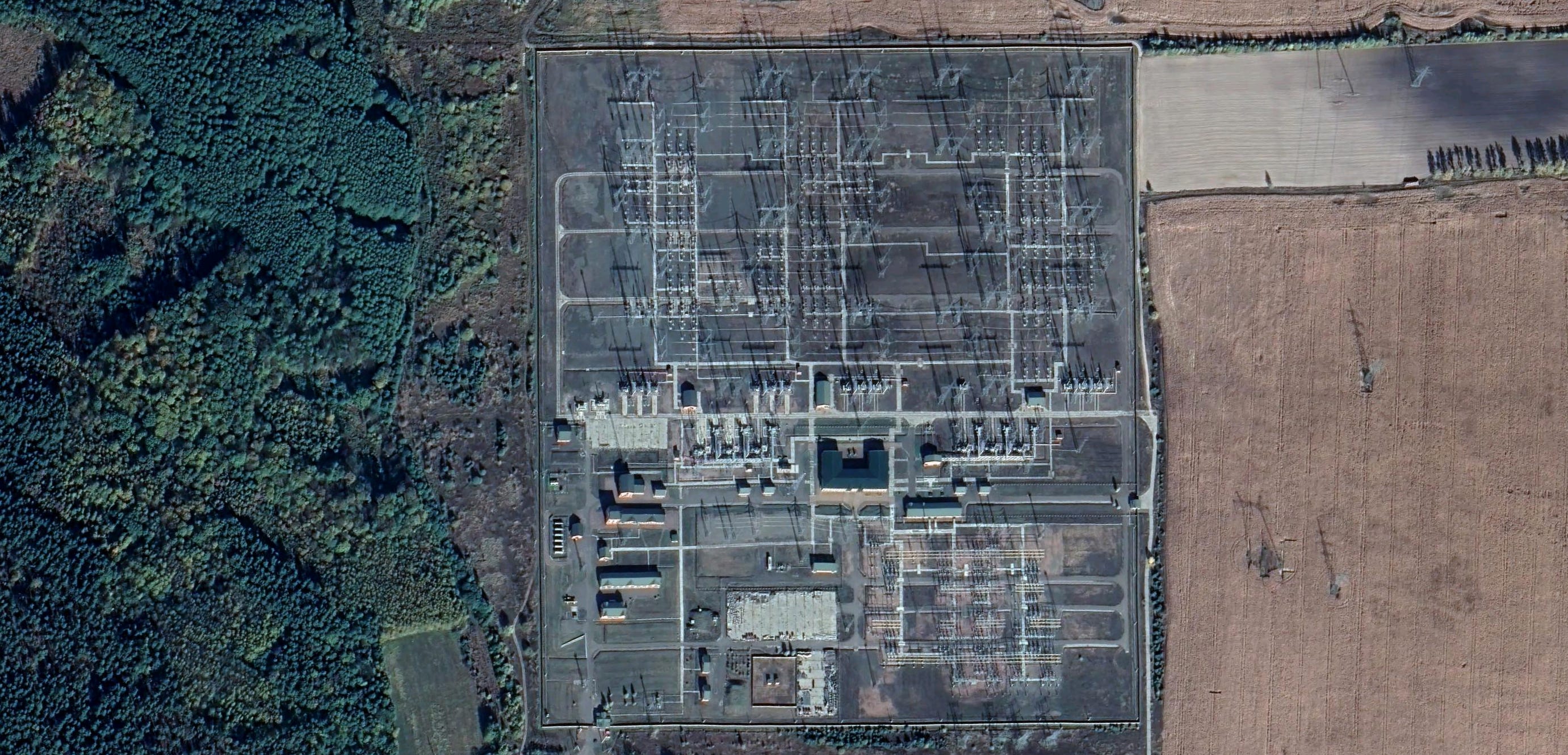
Perhaps most importantly, the Russians also struck, and apparently severely damaged, the Kievska 750kV substation near the village of Nalyvaikivka, to the west of Kiev, using three Kalibrs, two Kinzhals, and two Iskander-K cruise missiles. As I’ve detailed previously, ultra-high-voltage 750kV transformer stations form the backbone of Ukraine’s grid. They connect major power stations and urban centers to each other, and without them, it’s impossible to balance energy production with consumption.
Electric grids function as an overlapping series of linked networks. Ukraine’s power generation facilities, like its nuclear power plants, use 750kV power to transmit to distant locations. The 750kV line is then “stepped down” using transformers to lower voltages, like 330kV, which is stepped down further, and so on, until the power reaches the end user.
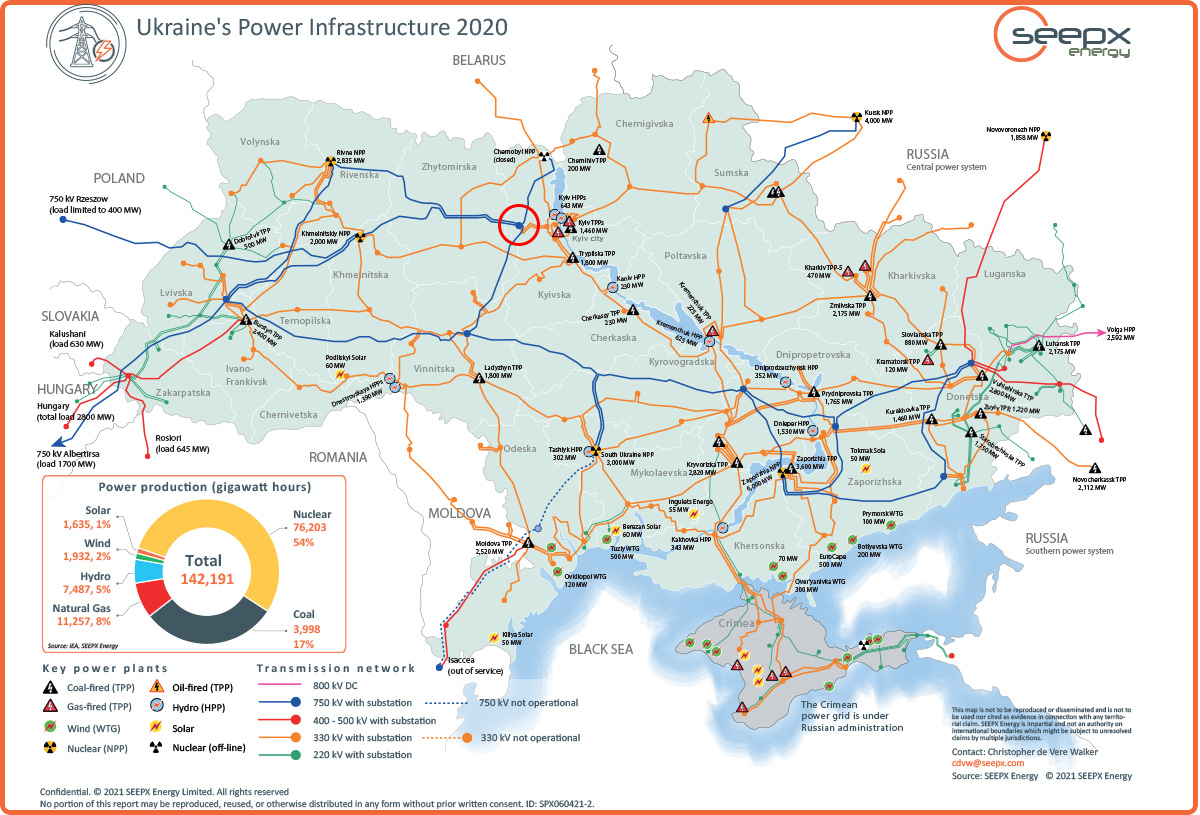
All 750kV substations are crucial for the Ukrainian grid to operate normally, but the Kievska substation is one of the most important in the entire system. It steps down UHV power from the Rivne and Khmelnytskyi nuclear power plants to Kiev. Without it, Kiev will be largely cut off from its primary power sources, and local thermal power plants and the 330kV grid will have to pick up the slack. With Russian attacks on local TPPs and 330kV substations becoming more frequent week by week, the situation is rapidly deteriorating, and Ukrenergo has implemented rationing and rolling blackouts throughout the country.
The total payload of the strike package that hit the Kievska site was likely in excess of 3,000kg, more than two FAB-3000 bombs. Ukrainian repair crews will have to work around the clock to repair the damage, and depending on how extensive it is, they may have to essentially rebuild it from scratch.
The Ukrainians have slowly built up a strategic stockpile of essential energy infrastructure components. The Ukraine Energy Support Fund (UESF) has raised over €1.2 billion – €271 million in the first half of 2025 alone – from 22 countries to assist the Ukrainians in repairing and strengthening their grid. The fund has delivered €510 million worth of spare parts and components, including at least 18 UHV 750kV transformers.
A 750kV station like Kievska contains four UHV transformers. These components cost between $2 and $10 million a piece and weigh up to 600 tons. The Ukrainians have 5 standalone UHV stations undergirding their grid, and another four UHV switchyards at the Rivne, Khmelnytskyi, South Ukraine, and Chernobyl (its switchyard is still active) NPPs. A reasonable estimate for the total number of 750kV transformers currently in use is 40.
The effects of the destruction of any one of the standalone stations vary dramatically depending on its location. More than half of Ukraine’s power generation comes from its three active nuclear power plants. Each NPP transmits 750kV and lower voltages for local customers. The three easternmost 750kV stations – Kievska, Vinnitska, and Dniprovska – are the most vulnerable, as destroying the three of them would threaten to cut nearly the entire central and eastern regions of Ukrainian-held territory off from the UHV grid and the three active Ukrainian NPPs.
After a limited series of strikes on 750kV stations in 2024, the Russians have refrained from targeting them. As I’ve said before, this is the opposite of what you’d do if your intention was to collapse the Ukrainian grid. That these strikes have resumed is a signal, but of what?
Over the past week, the Ukrainians have launched strikes against:
Vladmirskaya 750kV substation
Oryol TPP
The Frolovskaya substation in Volgograd region
A substation in Kursk
Smolensk TPP
Balashovskaya 500kV substation (Saratov)
Arzamasskaya 500kV substation (Nizhny Novgorod)
Because of this, the Russian strike on Kievska may be retaliatory. The Ukrainian attacks have caused temporary blackouts but no visible long term effect as of yet.
As I’ve described previously, the Ukrainians are at a major disadvantage in an energy attrition war against the Russians. Key Russian energy sites like the 750kV substation in Vladimir are over 400 miles from Ukrainian drone launch sites, while Ukrainian 750kV substations like Kievska are half that distance from Russian launch lines near Kursk. The Russians have plentiful ballistic and cruise missiles at their disposal, some of which are nearly impossible to shoot down, and all of which have large explosive payloads. Meanwhile, the Ukrainians have to pass through layers of intact air defenses using large numbers of light drones with small payloads, or risk scarce missile platforms like the Neptune. It isn’t within Ukraine’s capability to deliver anything close to the explosive payload of the Russian strike on Kievska on strategic Russian infrastructure outside of border areas like Belgorod, which are within HIMARS range.
Another concern is the exchange ratio at play. A facility like Kievska will cost tens of millions of dollars to rebuild, but only a few million to destroy. While the Ukrainians may be playing with European money, UHV electrical transformers are extraordinarily hard to come by, with customers having to wait years to see an order fulfilled. Repair crews have to move massive pieces of equipment and work frantically to keep up with the rate of damage.
Over the next few days, the blackout schedule for Ukraine as a whole and especially Kiev will be a key signal to watch. If Ukrenergo is unable to restore full service to the city within a few days, the Kievska station was likely completely destroyed. Another key signal to look out for is – presuming the Ukrainians are able to repair it – the Russians striking Kievska a second time.
Here’s what I said in my piece on the energy war three weeks ago:
…The logical conclusion then is that the Russian strategy in the energy attrition war is to slowly escalate as a form of deterrence, taking care to avoid a true humanitarian crisis, which would redound to the benefit of the Ukrainians… Meanwhile the Ukrainian grid has been made more and more vulnerable over time, while the Ukrainians and their European sponsors have had to exert great expense and effort to keep it functioning.
The Russian strategy hasn’t worked, because the Ukrainians have begun to call their bluff in earnest. AFU planners are aware of Russian offensive potential, but have plowed forward with the energy war all the same. The state of the Ukrainian grid is now dire, with the Russians having the ability to impose blackouts in large cities like Kiev or Kharkov at will, or near-full blackouts of the entire country with exceptionally large attacks. Because the Ukrainians have shown no signs of being deterred, the only possible direction the situation can go is towards further escalation.
I stand by this assessment, because the energy war shows no sign of slowing down. Just two hours ago, the Ukrainians launched an attack on the Voronezh CHP, starting a fire at the plant. This fits the general pattern – when the Russians retaliate, the Ukrainians retaliate back within 24 hours. One has to wonder what the Ukrainian mindset is here, considering the level of escalation dominance the Russians have. It is well within Russia’s capability to destroy every Ukrainian 750kV substation in a single night.
Due to the recent threat for a false flag attack on ZNPP, perhaps this has caused my dad Vlad to be proactive and eliminate the possibility of allowing the light required to read the plans for that false flag. Which Chatham hoarehouse states, the only problem is how to blame Russia....
The RT article discussing this is cited by a commentator in the last substack I posted.
Kitten asked where is the flower id usually have posted too. I didn't think twas appropriate to put one in that post.
Actually, I generally feel tis inappropriate for me to post, lately, but this threatened false flag is an exception to that sentiment....
Another fine piece, Sir
A key signal of escalation will be if they "double tap" Kievska. I hope for the sake of the grid technicians that it doesn't happen.