
No Country for MALE Drones
The "Reaper Genocide" continues apace
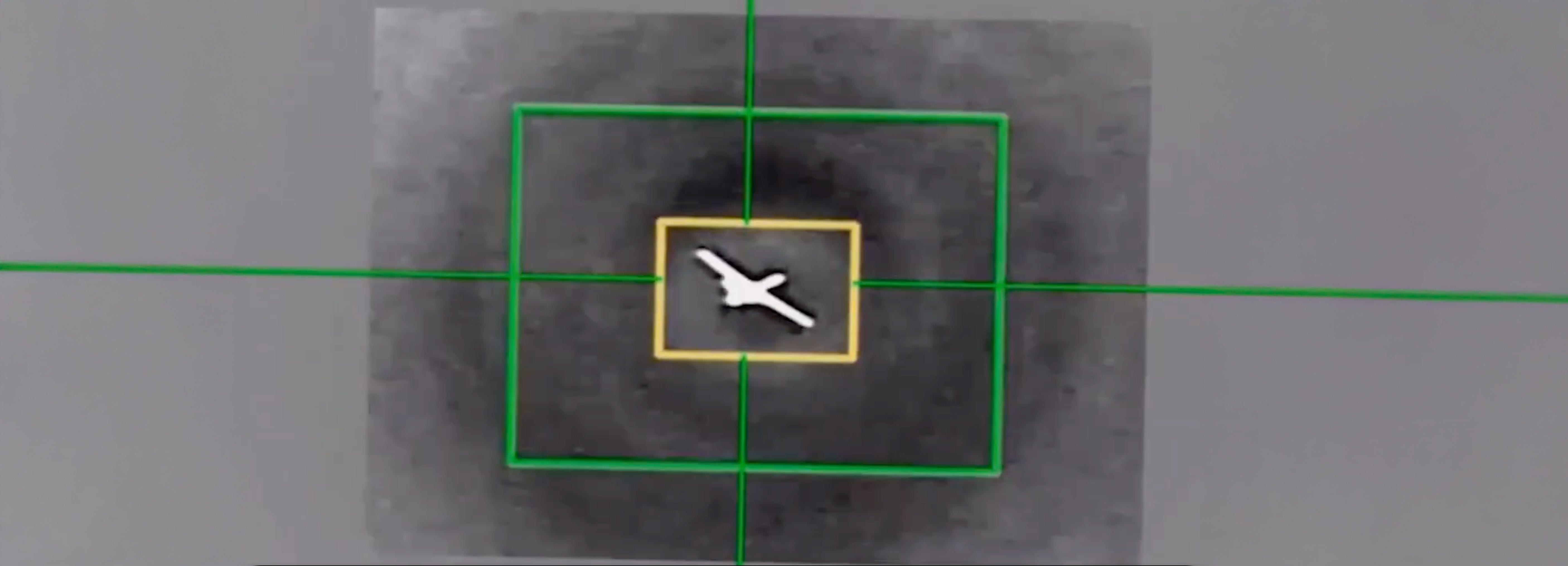
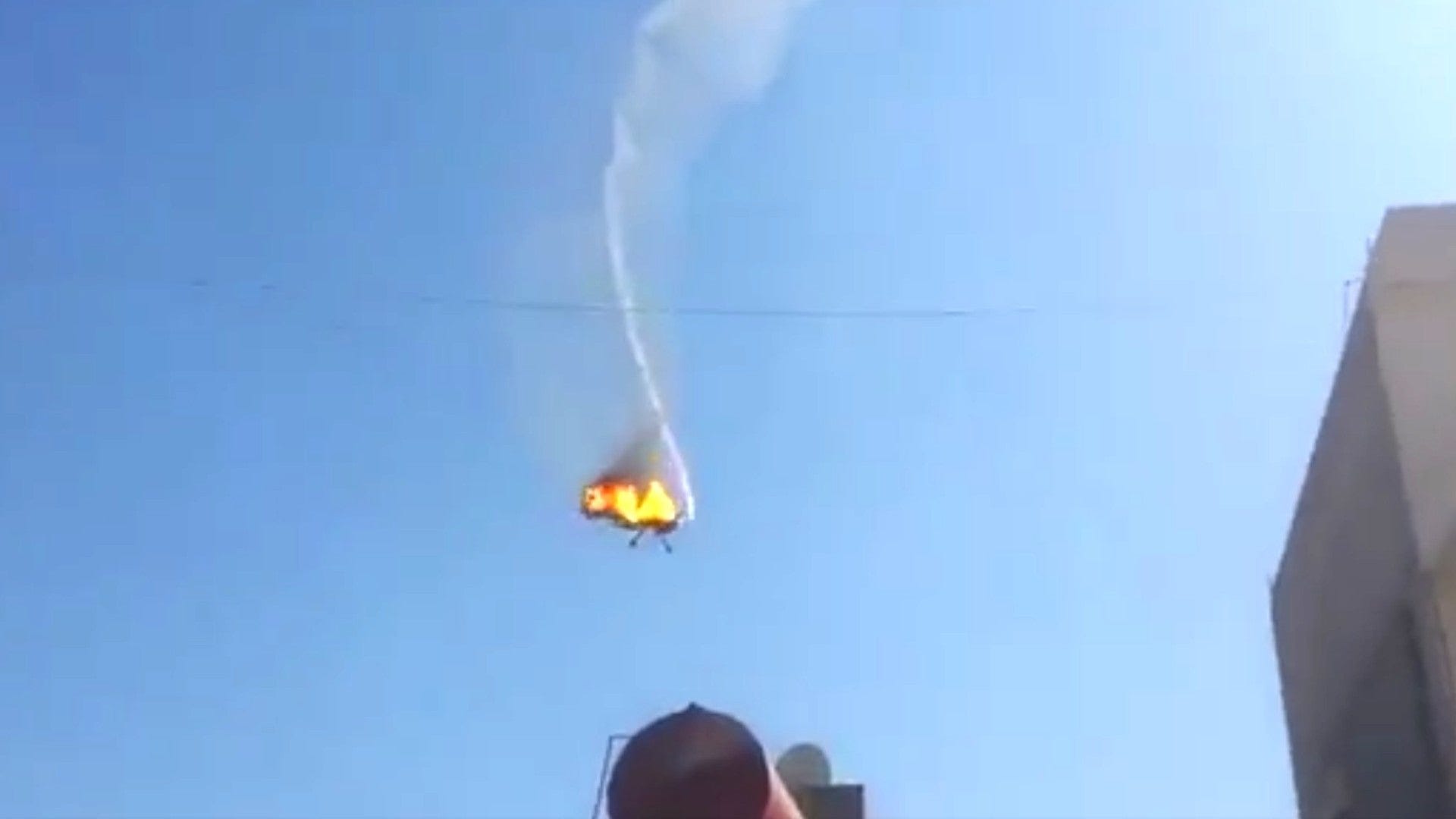
On October 1st, 2017, three videos of a flaming airframe falling out of the sky over Yemen appeared on YouTube. After crashing to the ground and exploding impressively, the wreckage appeared in widely shared images to closely match the profile of an American UAV. The next day, CENTCOM acknowledged that an MQ-9 Reaper, the USAF’s premier Medium Altitude Long Endurance (MALE) drone, had been lost to a surface-to-air missile fired by Ansar Allah. The news made major headlines, as the Reaper had enjoyed a sterling reputation since its introduction in 2007. Around two dozen airframes had been lost due to malfunctions and accidents, at least officially, but none had ever been acknowledged as lost to enemy fire in the platform’s 10-year operational span.
The MQ-9 emerged out of the UAV revolution kicked off by its predecessor, the MQ-1 Predator. The Predator began as the RQ-1, a roughly $3 million reconnaissance (the R stands for “reconnaissance” while M is “multi-mission”) UAV. The RQ-1 was heavily leveraged during NATO’s bombing campaigns against the former Yugoslavia, flying hundreds of sorties, and planners quickly identified that it could be much more useful if it were capable of immediately attacking the targets it identified rather than relying on manned platforms to handle the ordnance.
This wasn’t a new idea. The USAF and IAF had developed reusable ISR UAVs, UAVs with real-time video surveillance, and even UAVs capable of firing air-to-surface missiles as early as the seventies. What made the Predator platform unique was its incredible endurance (24 hours of loitering time, hence the “Long Endurance” in MALE ) and satellite link, allowing operators to continuously monitor battlefields from thousands of miles away.
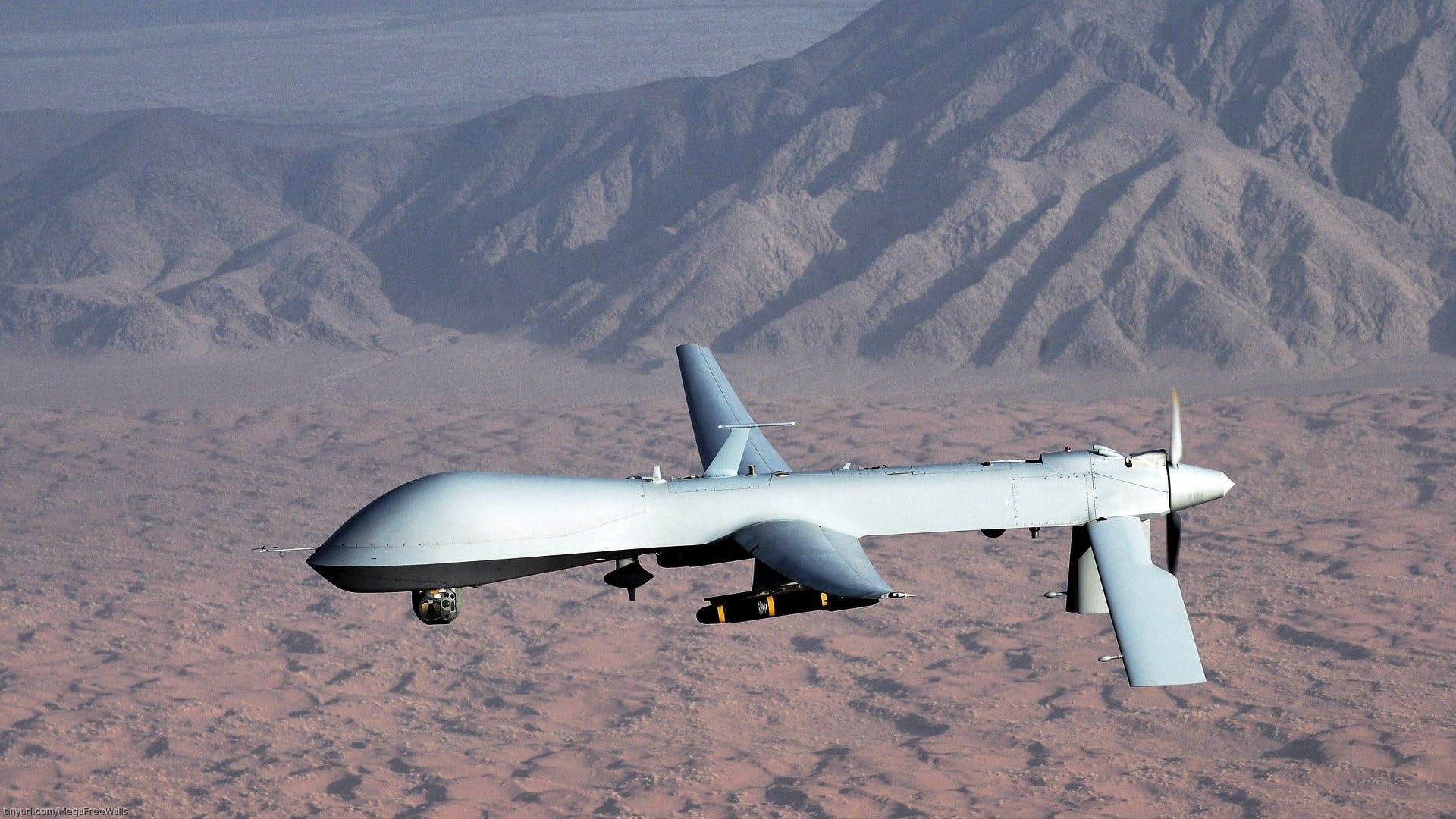
The RQ-1 had issues in the Balkans. It didn’t fly well in poor weather, was prone to accidents, and Serbian tallies claim multiple shootdowns. But the utility of an upgraded platform capable of carrying munitions was clear, and the USAF began development of a variant with a laser designator and pylons for carrying the AGM-114 Hellfire anti-tank missile. This variant became the MQ-1, and it launched its first Hellfire in a test at Nellis Air Force Base seven months before 9/11, just in time for the Global War on Terror.
The serendipity is remarkable, as the battlefield conditions of the GWOT were the most ideal operating environment imaginable for the “hunter-killer” UAV. The US military faced few adversaries fielding surface-to-air missiles, and the targeted assassination program run by the CIA heavily leveraged the long loiter times of MALE drones. This led to a revolution in doctrine and the production of hundreds of MQ-1s.
The issue with the MQ-1 was that it hadn’t been designed for an attack role. Its small, lightweight airframe and weak 115-horsepower engine allowed it to carry a few Hellfires, and not much else. The development of a successor, dubbed “Predator B,” was already underway when the MQ-1 fired its first missile in testing. Its successor would be built from the ground up for the hunter-killer role, with an engine pushing eight times the horsepower and providing three times the cruising speed. Its airframe would support fifteen times the payload, and its flight ceiling would double. It would be larger, heavier, and capable of de-icing so it could fly in bad weather conditions. It would drop 500lb laser-guided bombs. And it would cost five times the price of the platform it was replacing.
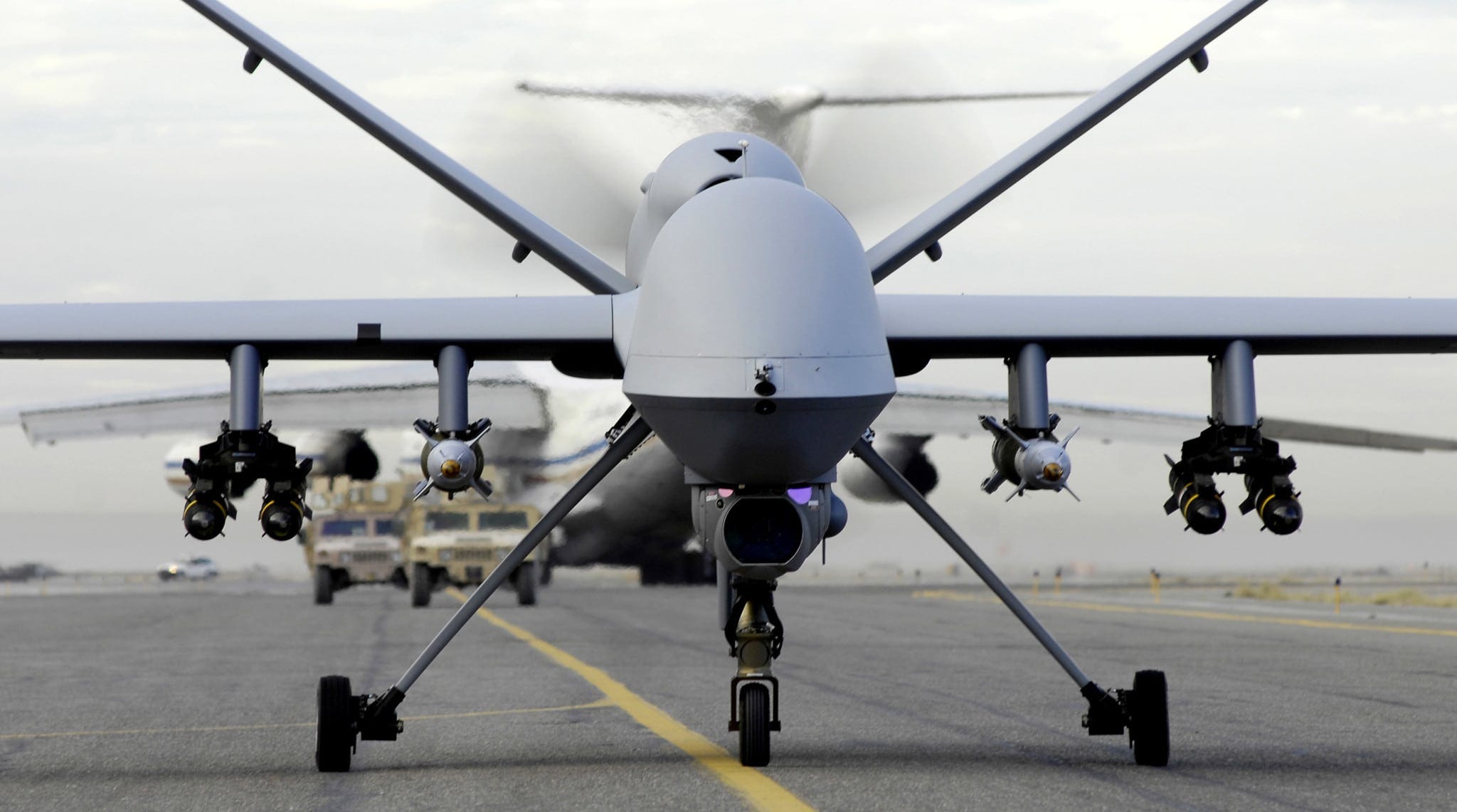
Predator B became the MQ-9 Reaper. The MQ-9 grew into the US military’s hunter-killer workhorse, logging nearly a million flight hours between its introduction in 2007 and 2017. The platform, with its 27-hour ISR mission capability, was so crucial to operations over the Middle East that its pilots began to suffer mass attrition from burnout. Continuous surveillance became a core tenet of US military doctrine. The Pentagon ordered the USAF to ramp up its UAV production to allow 65 combat air patrols to fly continuously across the world. Drone assassinations exploded, as did deadly strikes outside declared American war zones in Pakistan and Yemen, where there were over 100 strikes in 2017 alone.
When Ansar Allah shot down an MQ-9 in October of 2017, it wasn’t a major surprise to astute observers. In 2013, USAF Air Combat Command chief General Mike Hostage said the following to a crowd of active duty and retired USAF personnel attending the Air Force Association’s annual conference:
“Today I couldn’t put [a Predator or Reaper] into the Strait of Hormuz without having to put airplanes there to protect it. We’re trying to convince [the Office of the Secretary of Defense] that the 65 challenge [65 CAPs worldwide] — while it made sense to the people who gave it to us when it was given, and we dutifully went after it — is not the force structure the nation needs or can afford in an anti-access, area-denial environment… They want it in a contested environment, and we can’t do it currently. We’re not talking deep over mainland China; we’re talking any contested airspace. Pick the smallest, weakest country with the most minimal air force — [it] can deal with a Predator. My argument would be, we can’t afford to keep all of this capability, so we’re going to have to bring some of it down.”
Hostage would prove remarkably prescient. Ansar Allah would down two more Reapers by the end of 2019, and on the surface at least, they appeared to fit the bill for Hostage’s imagined “small, weak” country with a minimal air force. Their SAM systems, dubbed Barq-1 and Barq-2, are likely related to Iran’s Taer family of systems, which are in turn based on Soviet systems like the 2K12 Kub and 9K37 Buk. While these systems are far from state of the art, UAVs like the Reaper are exceptionally vulnerable due to limited maneuverability, low relative speed, a large radar cross-section and thermal footprint, and predictable, loitering flying pattern. Two Reapers were lost in rapid succession in Libya in 2019 (possibly at the hands of Wagner Group), another over Syria in 2020, and one more over Libya in 2022.
2022 offered a unique opportunity to see MALE drones deployed in a peer or near-peer conflict for the first time. As we’ve covered extensively in a prior piece, the TB2 Bayraktar was the first MALE to face a major power with state of the art air defenses. While the TB2 was designed deliberately by Turkish defense firm Baykar to be cheap, perhaps 20% the cost of an MQ-9, it shared the same fundamental advantages and limitations of its pricier cousin.
Despite highly publicized successes in the first weeks of the war, the TB2 suffered devastating attrition in Ukraine, with Russian air defenses destroying around 100 of them in 2022 and 2023. By the end of 2023 it had disappeared from the battlefield, with the Ukrainians publicly stating they could find no viable use for it. If the Pentagon was watching, they made no official acknowledgment of it.
In 2023, the US entered into direct conflict with Ansar Allah for the first time since 2016. Previous Reaper missions over Yemen had been sold by the Pentagon as “indirect” ISR support for the Saudi war against Ansar Allah, along with a parallel offensive campaign against Houthi enemy Al-Qaeda in the Arabian Peninsula (AQAP). The first loss of a Reaper came within three weeks of the start of the Red Sea crisis, in November 2023. Another two were downed from February to April. US officials said they were scratching their heads at the capabilities demonstrated by the Yemenis, and admitted, “There’s a good bit right now we don’t know about the Houthis.”
In May 2024, the “Reaper Genocide” began in earnest. A platform that had once logged a million flight hours without a single combat loss suddenly began suffering attrition at a rate not seen by an American aircraft since the Vietnam War. Two Reapers went down in May (video above), one in August, as many as five in September, and one each in October, November, and December. At least seven more would be lost in 2025. The Houthi tally in the Red Sea crisis is somewhere in the realm of 20 MQ-9s shot down, potentially more, with three shootdowns preceding the crisis. There is no official Pentagon tally.
The rapid attrition of the Pentagon’s Reaper fleet became the subject of some concern in 2025. Given the platform’s track record, the existing fleet was not in danger if the Red Sea Crisis were to abate and normalcy be restored. In monetary terms, the losses were approaching the billion-dollar mark, but the more relevant issue was the size of the fleet and the fact that it was ending its production lifecycle.
While the MQ-9B, a newer variant designed for export, maritime ISR, and domestic security applications is still being manufactured, its order book is already filled, with delivery times already facing delays and stretching into the 2030s. General Atomics delivery schedule suggests it can manufacture 15-20 of them per year. The US military procured its last MQ-9A in 2020, and the production line was fully shuttered in 2025. There is no replacement available, with the “MQ-Next” being little more than a vague concept that may or may not result in a tangible system in the distant future.
The scale of the problem reached dizzying proportions after the start of the Iran War. True to General Hostage’s prediction, the Iranians have claimed dozens of Reapers, and while the exact total is unknown, CENTCOM has certainly lost more MQ-9s in five months of war with Iran than it had in the entirety of the platform’s operational life preceding it. The opening 40-day phase saw so many losses (over $1 billion worth) it sent the Pentagon scrambling to find a solution. Demands have been made to restart the MQ-9A production lines. Reapers sold to allies may be bought back. There are as few as ten unsold Reapers worldwide, and the USAF plans to buy all of them.
A Congressional hearing in May revealed the remaining fleet stood at 135 airframes, a precipitous decline from the 165 available in October 2025 and 231 in October 2024. Dozens of units may have been lost since then, if Iranian claims are to be believed.
The obvious question, then, is why the US military is accepting such heavy attrition of its “most valuable player.” Yes, a drone is a much more acceptable loss than a manned aircraft, but why is a system the top brass of the USAF understood to be fundamentally incompatible with a contested environment, unsuitable specifically for the Strait of Hormuz—according to General Hostage—being sent directly into that specific environment? And not just once or twice, but day after day, in the face of attrition so severe it threatens to fundamentally compromise a key component of US military doctrine? Here we’ll have to speculate.
A possible explanation is that the US force in the region has relied on the Reaper not as a supplement to airstrikes by manned aircraft overflying Iran, but as a substitute. While there is some credible footage of American aircraft flying in Iranian airspace, it’s been difficult to come by. The White House has made a point of selling a narrative of total air supremacy, but the evidence that such supremacy has been obtained for more than brief periods is thin. The USAF and USN have heavily leveraged long-range air-to-ground missiles like the JASSM-ER that can be safely fired from outside Iranian airspace to the point of risking the US military’s readiness for years to come. The US Army’s HIMARS systems in Kuwait and Bahrain have worked overtime to keep up attacks on the Iranian coastline, at great cost to their Bahraini and Kuwaiti hosts. If Iranian airspace is less permissive than US officials have let on, we could expect to see an overreliance on both long-range standoff munitions and drones, and indeed this is precisely what we’re seeing.
Interestingly, the Israeli Air Force suffered similarly severe attrition of its MALE drones in the 40-day opening phase of the war. Some analysts have questioned Israeli narratives on their air missions against Iran going back to 2024. The theory goes like this: the Israelis, being even more sensitive to the loss of air assets than the Americans, have flown few, if any, air missions deep into Iranian airspace. Instead, they have repeatedly attempted to pass off drone attacks, some of which were potentially launched from Azerbaijan or within Iran itself, as bombing runs by the Israeli Air Force. This produces a psychological effect on the Iranian population with minimal cost to the IAF, and maintains the reputation of expensive stealth aircraft like the F-35.
Another potential explanation is that the Americans and Israelis are having trouble finding targets to hit in Iran. CENTCOM has repeatedly shared footage of obvious hits on decoys. The campaign to collapse missile city entrances has clearly not worked out as American planners hoped. The Iranians have planned for this war for decades, and it may be the case that their key assets, like missile launchers and logistics vehicles, are simply too mobile and protected for a conventional manned aircraft to locate in Iran’s vast inner territories and strike. Because Iranian airspace is non-permissive, manned aircraft are unable to loiter over target zones. The only tool for the job, then, is the Reaper, which can stay aloft for 27 hours surveilling an area and strike a newly identified target in seconds.
For this reason, I expect the attrition of the Reaper fleet to continue. There is no viable alternative for its role in the war, a role it was never meant to play. The great irony of the MALE class is that while it may be obsolete, at least in a near-peer conflict, it is less obsolete than the available alternatives. To accomplish the job foisted upon it, against all doctrinal thinking, a $30 million platform has become disposable.
You missed a golden chance to use "Hostage to Fortune". Otherwise 10/10.